Gravel
How to Calculate Gravel for a Driveway
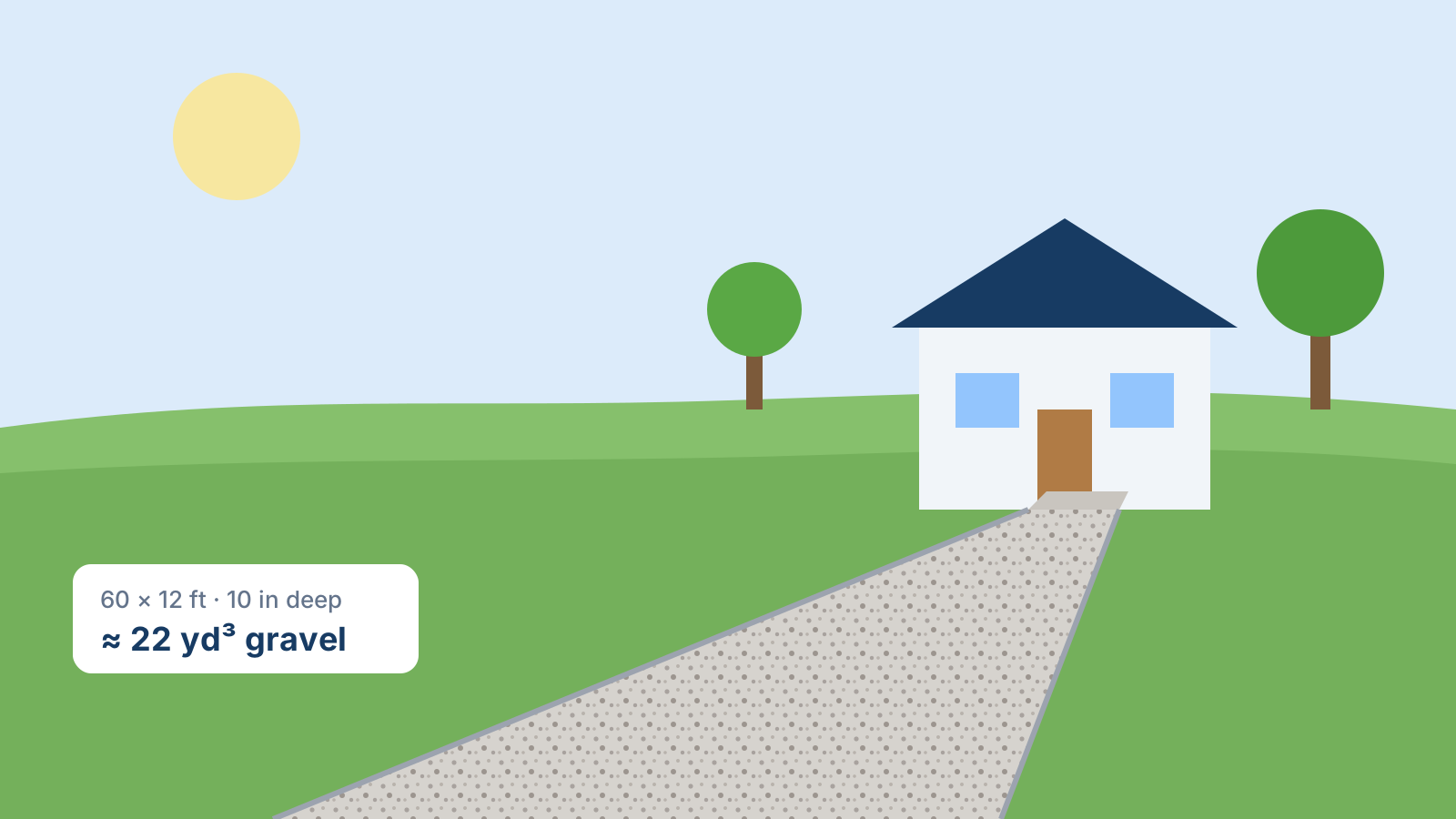
Step-by-step guide to calculating driveway gravel in cubic yards and tons, including layers, compaction and converting volume to weight with real examples.
2 min read
22 free calculators for concrete, gravel, landscaping, pavers and lumber · imperial & metric
Explore all toolsGravel is sold either by volume (cubic yards or cubic metres) or by weight (tons or tonnes). This calculator gives you both. Enter the area and depth, then adjust the density to match the stone your supplier sells.
Enter your measurements and press Calculate to see quantities, a material breakdown and an optional cost estimate.
Density links volume and weight. It varies with stone type, particle size and moisture, which is why the calculator lets you change it. A common planning figure is around 1.4 tons per cubic yard, but your supplier's figure is always better.
A 20 × 10 ft path covered 3 in deep, with 10% extra and a density of 1.4 tons/yd³.
Result: Order about 2 cubic yards, or roughly 3 tons, of gravel.
Typically between about 1.2 and 1.7 tons, depending on the stone and how wet it is. Crushed stone and gravel are often estimated at around 1.4 tons per cubic yard, but ask your supplier.
Decorative gravel and paths are commonly 2–3 in deep. Driveways and parking areas need a thicker, layered build-up, often 8–12 in in total. See how deep a gravel driveway should be.
Yes. Gravel compacts and spreads into soft ground, so 5–15% extra is common. It is usually cheaper to order a little extra than to pay a second delivery fee.
Step-by-step guide to calculating driveway gravel in cubic yards and tons, including layers, compaction and converting volume to weight with real examples.
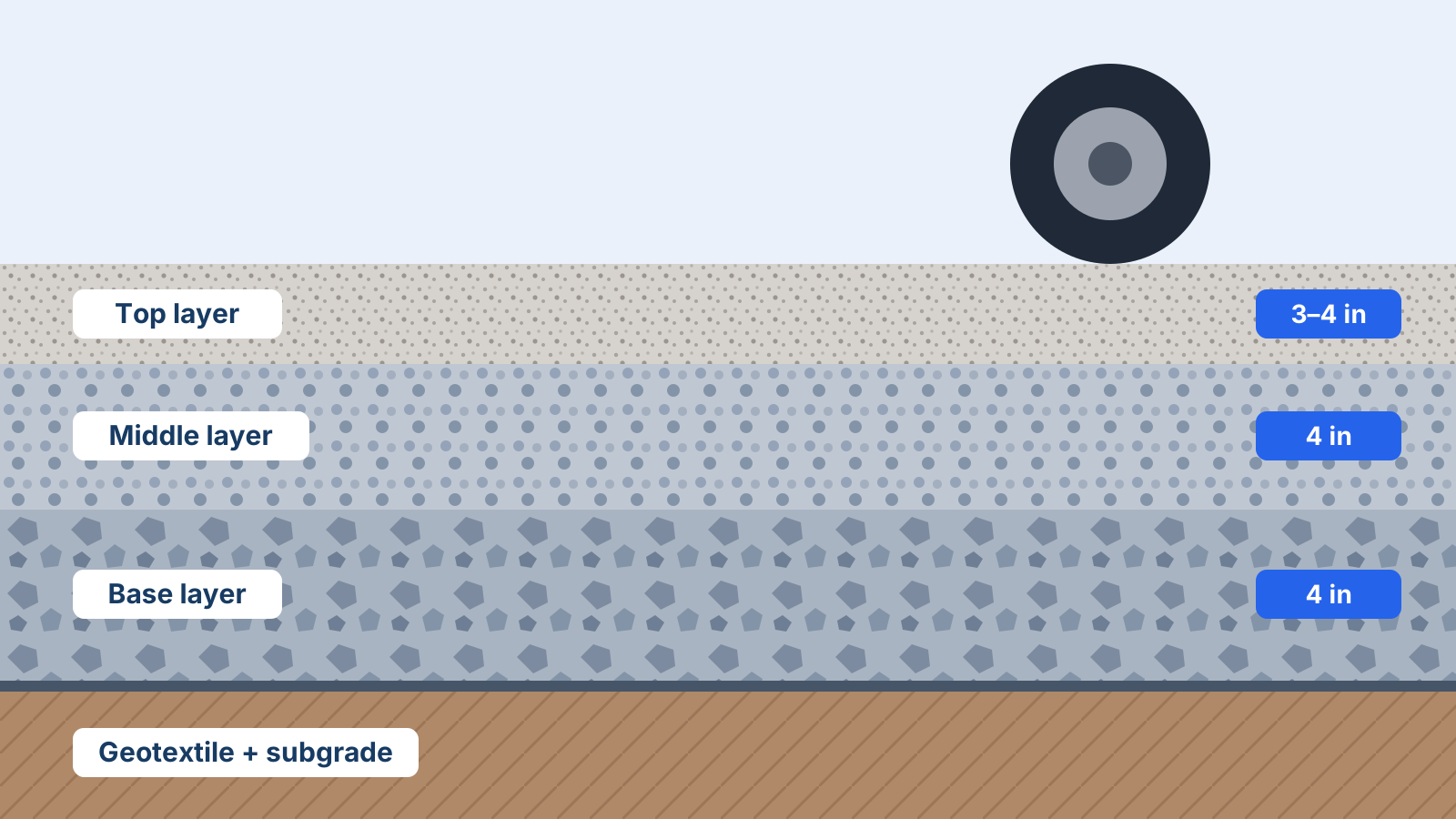
Recommended gravel driveway depths for new builds, soft soils and resurfacing, with layer-by-layer guidance and the volume impact of each extra inch.
Results are estimates based on the measurements and assumptions you enter. Always confirm product specifications, local building codes and final quantities with your supplier or a qualified professional. See our disclaimer.