Gravel
How to Calculate Gravel for a Driveway
Step-by-step guide to calculating driveway gravel in cubic yards and tons, including layers, compaction and converting volume to weight with real examples.
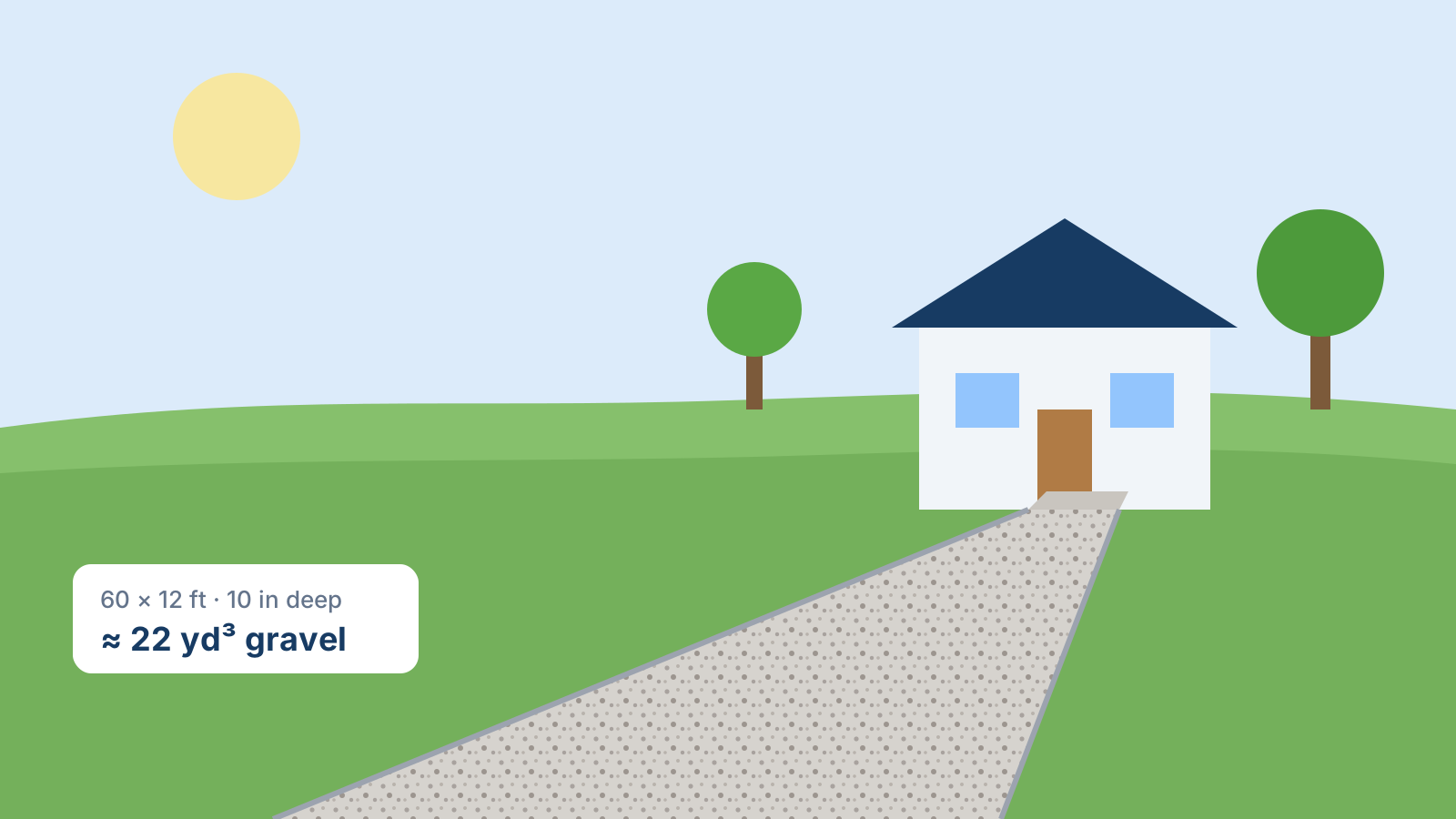
A gravel driveway can be one of the most affordable driveway surfaces, but only if you order the right amount of the right stone. Under-ordering means a second delivery fee; over-ordering leaves you with a pile of stone on the lawn.
This guide shows how to calculate the volume of each layer, convert it to tons for your supplier, and allow for compaction.
Step 1: Measure the driveway
Measure the length from the road edge to where the driveway ends, and the width. A single-car driveway is commonly 10–12 ft (3–3.6 m) wide; a double is often 20–24 ft (6–7.3 m).
For curved driveways, measure the length along the centreline. Add turnarounds and parking pads as separate rectangles.
Step 2: Plan your layers
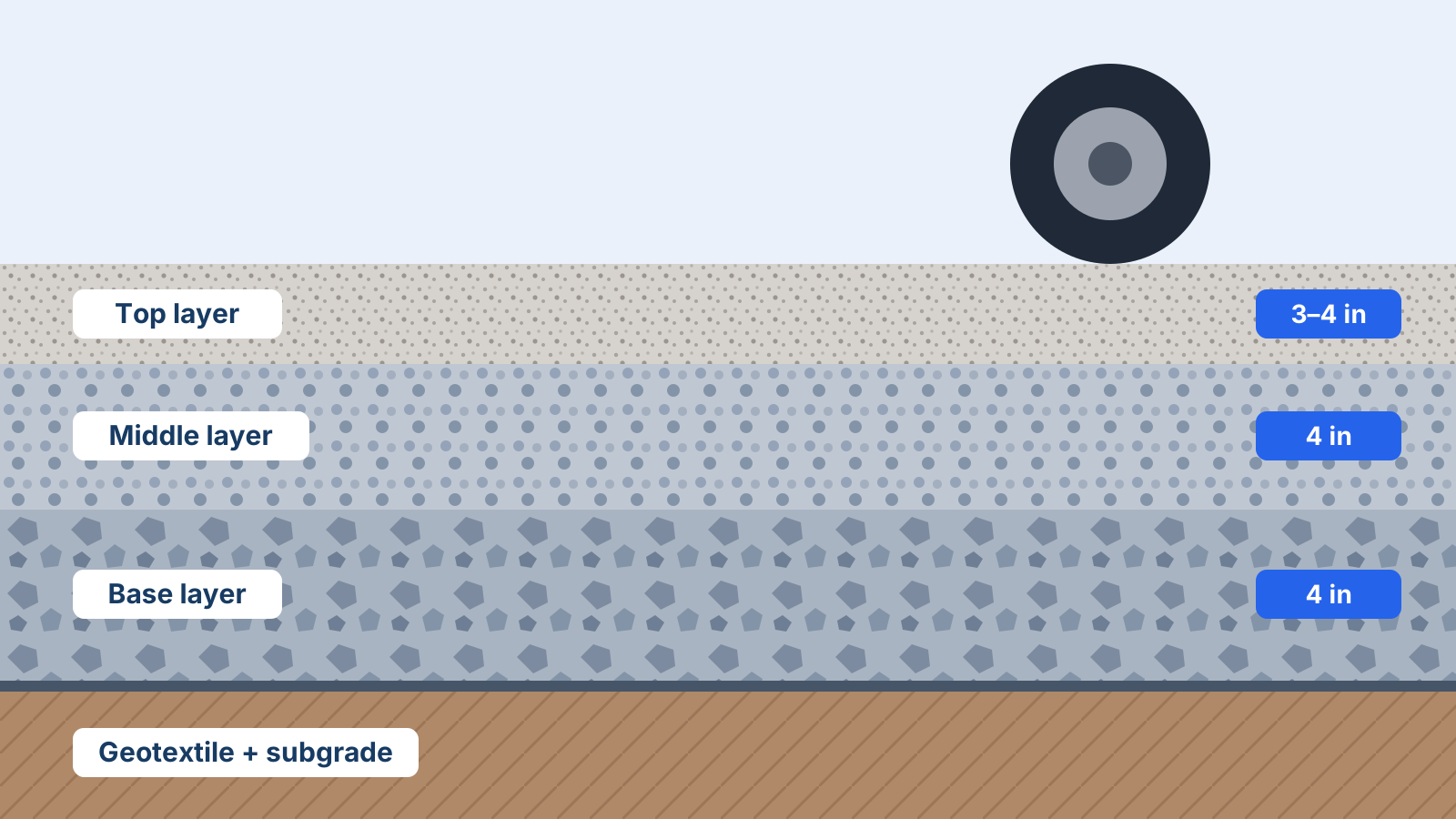
Well-built gravel driveways use layers of decreasing stone size. A common three-layer build is:
| Layer | Common material (US names) | Typical depth |
|---|---|---|
| Base | #3 crushed stone (1–2 in) | 4 in |
| Middle | #57 crushed stone (¾–1 in) | 4 in |
| Top | Crusher run / #411 / dense grade | 3–4 in |
Stone names vary by region and quarry. Ask your supplier what they recommend for driveways locally. For more on depth, read how deep a gravel driveway should be.
Step 3: Calculate volume for each layer
Volume = length × width × depth. Convert depth from inches to feet first, then divide cubic feet by 27 to get cubic yards.
Example
A 50 × 12 ft driveway
- Area: 50 × 12 = 600 ft²
- Base (4 in): 600 × 0.333 = 200 ft³ = 7.41 yd³
- Middle (4 in): 7.41 yd³
- Top (3 in): 600 × 0.25 = 150 ft³ = 5.56 yd³
- Total: 20.4 yd³
Step 4: Allow for compaction
Loose stone loses volume when it is compacted and some works into the subgrade, especially on soft soil. Adding 10–15% is a common allowance.
Example
Adding 10%
- 20.4 yd³ × 1.10 = 22.4 yd³
Step 5: Convert cubic yards to tons
Many quarries sell stone by weight. Multiply volume by the density of the stone. Crushed stone is often estimated at around 1.4 tons per cubic yard, but it ranges from about 1.2 to 1.7 depending on the rock and moisture.
Example
Converting to weight
- 22.4 yd³ × 1.4 tons/yd³ = 31.4 tons
Result: Ask your supplier for their density figure for each product, and confirm the truck capacity — a large driveway may need several loads.
Try the Driveway Gravel Calculator
Layer-by-layer gravel quantities for a new or resurfaced gravel driveway.
Frequently asked questions
How much gravel do I need for a 100 ft driveway?
For a 100 × 12 ft driveway with 10 in of total depth, you need about 37 yd³ before compaction (1,200 ft² × 0.833 ft ÷ 27), or roughly 41 yd³ with 10% extra.
How many tons of gravel come in a dump truck?
It varies by truck. A tandem-axle dump truck commonly carries somewhere around 10–15 tons, but load limits depend on the vehicle and local regulations. Ask the supplier.
Should I put landscape fabric under a gravel driveway?
A woven geotextile under the base layer helps stop stone sinking into soft soil and is widely used on clay sites. It does not replace a proper base.
About the author
Written by the BuildCalcWorld Editorial Team. Our guides explain standard estimating methods with worked examples you can verify. Material properties vary by product and region, so always confirm specifications with your supplier. Published . Learn more about us.
Related articles
 Gravel
How Deep Should a Gravel Driveway Be?
Recommended gravel driveway depths for new builds, soft soils and resurfacing, with layer-by-layer guidance and the volume impact of each extra inch.
2 min read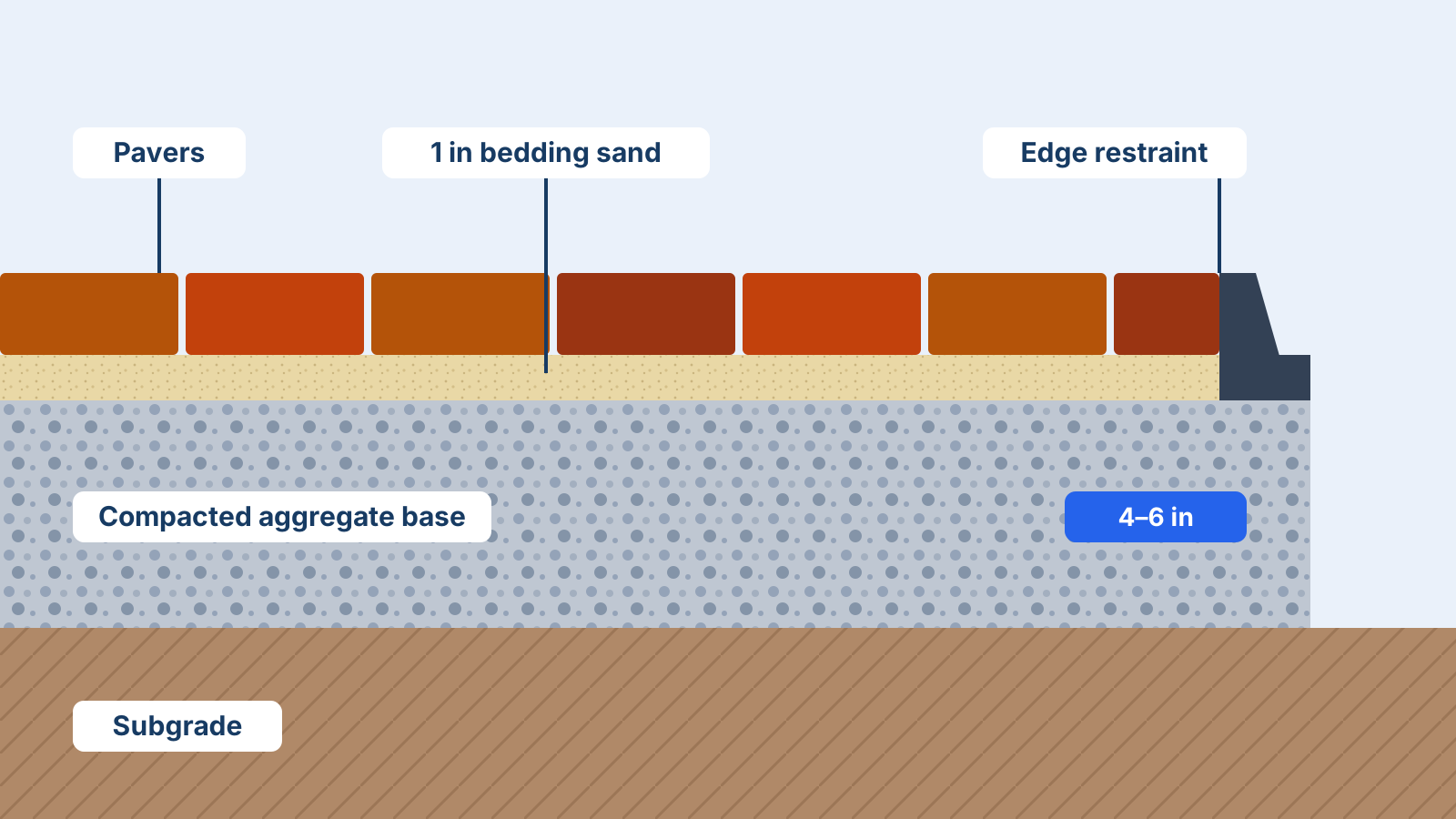 Pavers & Hardscaping
How to Calculate Paver Base Material
Learn how to calculate paver base gravel and bedding sand, choose the right base depth, account for compaction and convert to tons for ordering.
2 min read