Gravel
How to Calculate Gravel for a Driveway
Step-by-step guide to calculating driveway gravel in cubic yards and tons, including layers, compaction and converting volume to weight with real examples.
2 min read
22 free calculators for concrete, gravel, landscaping, pavers and lumber · imperial & metric
Explore all toolsChoose a driveway material, enter the driveway size and your local prices, and this estimator works out how much material to order, what it costs, and the total including any labour and site preparation you add. Run it once per material to compare options side by side.
Enter your measurements and press Calculate to see quantities, a material breakdown and an optional cost estimate.
Each material is priced the way suppliers usually sell it: concrete by volume, asphalt and gravel by weight, and pavers by area.
Asphalt and gravel densities are editable starting values. Use your supplier's figure when you have it.
A 50 × 12 ft gravel driveway, 4 in deep, 5% waste, gravel at 1.4 tons/yd³ and $40 per ton.
Result: About 10.9 tons of gravel costing roughly $436 before delivery and labour.
Gravel usually has the lowest upfront cost, followed by asphalt, then concrete and pavers. Long-term maintenance, climate and local prices change the picture, so run the estimator with quotes for each material you are considering.
Common ranges are 4–6 in (10–15 cm) of concrete, 2–3 in (5–8 cm) of compacted asphalt over a base, and 4–8 in (10–20 cm) of gravel. Heavier vehicles and soft soils need more. Follow local practice and your contractor's advice.
No. Most driveways need compacted crushed stone underneath. Size it with the driveway gravel calculator or paver base calculator, then add its cost under other costs.
Step-by-step guide to calculating driveway gravel in cubic yards and tons, including layers, compaction and converting volume to weight with real examples.
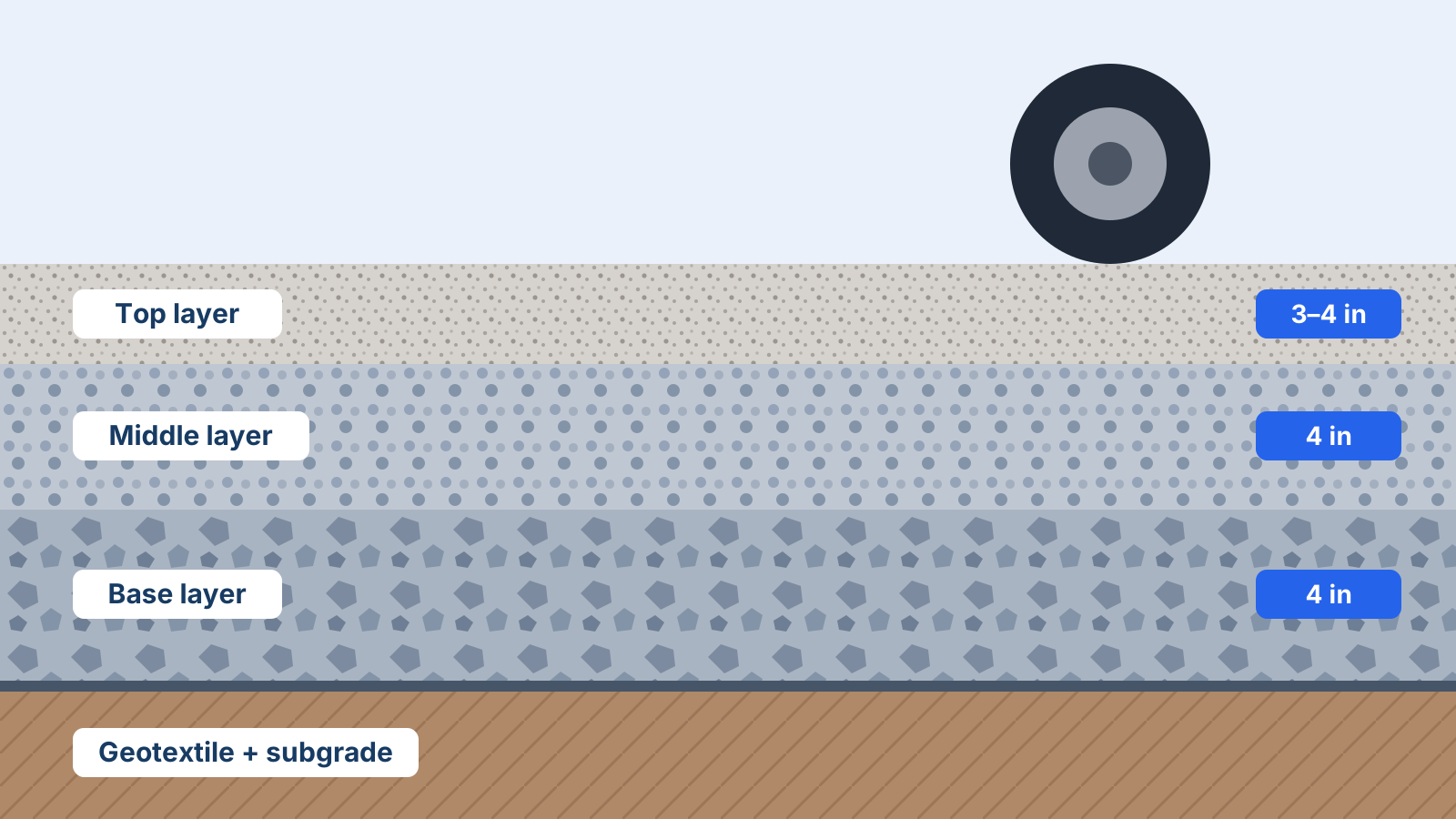
Recommended gravel driveway depths for new builds, soft soils and resurfacing, with layer-by-layer guidance and the volume impact of each extra inch.
Results are estimates based on the measurements and assumptions you enter. Always confirm product specifications, local building codes and final quantities with your supplier or a qualified professional. See our disclaimer.