Concrete
How Much Concrete Do I Need for a Concrete Slab?
Learn how to calculate concrete for a slab step by step, convert to cubic yards or cubic metres, add the right waste allowance and decide between bags and ready-mix.
3 min read
22 free calculators for concrete, gravel, landscaping, pavers and lumber · imperial & metric
Explore all toolsUse this calculator to work out how much concrete you need for a rectangular slab such as a patio, shed base, garage floor or equipment pad. Enter the slab size and thickness, choose a waste allowance and bag size, and you will get the volume to order from a ready-mix supplier or the number of pre-mixed bags to buy.
Enter your measurements and press Calculate to see quantities, a material breakdown and an optional cost estimate.
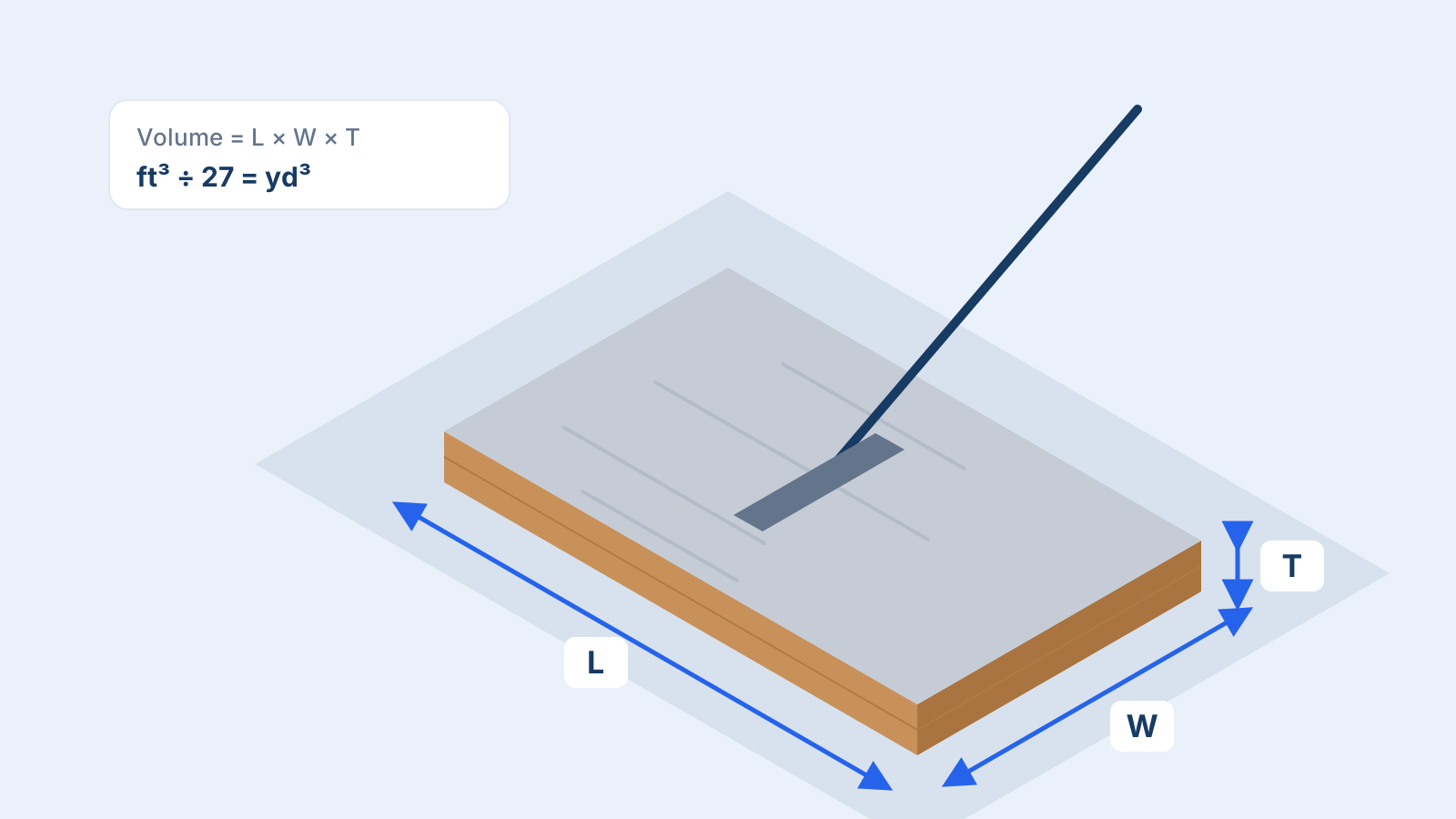
All three dimensions must be in the same unit before multiplying. In imperial units, divide the thickness in inches by 12 to convert it to feet, multiply to get cubic feet, then divide by 27 to get cubic yards.
In metric, convert the thickness from centimetres to metres (divide by 100) and the result is in cubic metres.
A 20 ft × 12 ft patio poured 4 inches thick with a 10% waste allowance.
Result: Order about 3.25–3.5 yd³ of ready-mix. Mixing 147 bags by hand is a very large job, so ready-mix is the practical choice here.
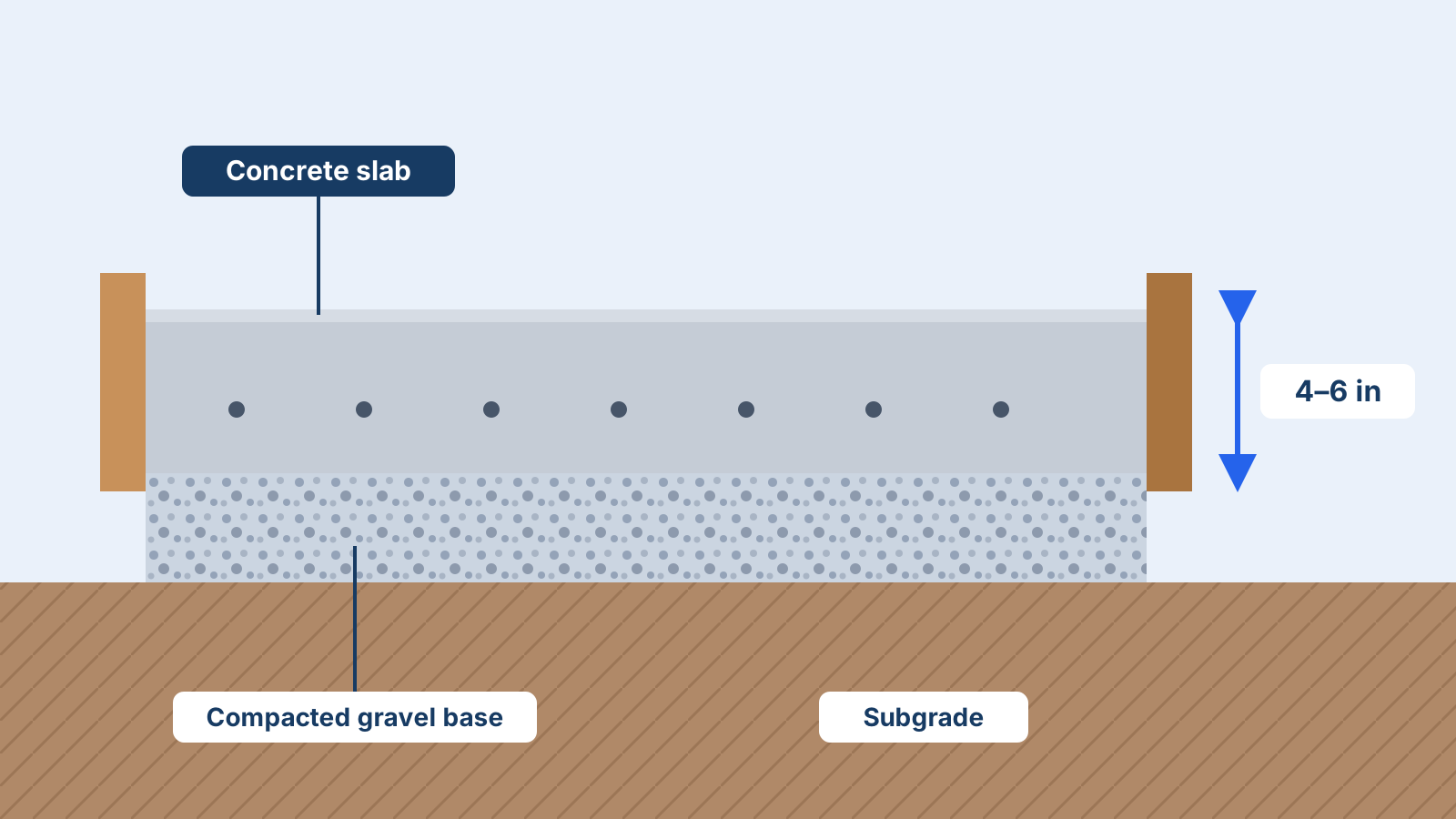
Patios and walkways are commonly 4 inches (10 cm) thick, while driveways and slabs carrying vehicles are often 5–6 inches (13–15 cm). Local codes, soil conditions and loads can require more. See our slab thickness guide.
Most people add 5–10%. Use the higher end if the subgrade is uneven, the forms are long or you are placing the concrete by wheelbarrow, because running short in the middle of a pour causes cold joints.
For small jobs under about one cubic yard, bags are usually convenient. Beyond that, ready-mix is often more economical and far less labour, though suppliers may charge short-load fees for small orders. Compare local prices with the cost estimator.
A cubic yard is 27 ft³. With a typical yield of 0.60 ft³ per 80 lb bag, that is 27 ÷ 0.60 = 45 bags, before any waste allowance.
Learn how to calculate concrete for a slab step by step, convert to cubic yards or cubic metres, add the right waste allowance and decide between bags and ready-mix.
How thick should a concrete slab be? Practical thickness ranges for patios, walkways, shed bases, driveways and garage floors, plus how thickness affects cost.
Results are estimates based on the measurements and assumptions you enter. Always confirm product specifications, local building codes and final quantities with your supplier or a qualified professional. See our disclaimer.