Concrete
Concrete Bags Calculator: How Many Bags Do You Need?
Understand concrete bag yields, convert volume into bags, and compare 40, 60 and 80 lb bags (and 20–30 kg bags) with worked examples and a quick reference table.
2 min read
22 free calculators for concrete, gravel, landscaping, pavers and lumber · imperial & metric
Explore all toolsPre-mixed concrete bags are convenient for small pours, but their yield is often misunderstood. Enter your project dimensions, or a volume you already know, and compare how many bags of each common size you would need.
Enter your measurements and press Calculate to see quantities, a material breakdown and an optional cost estimate.
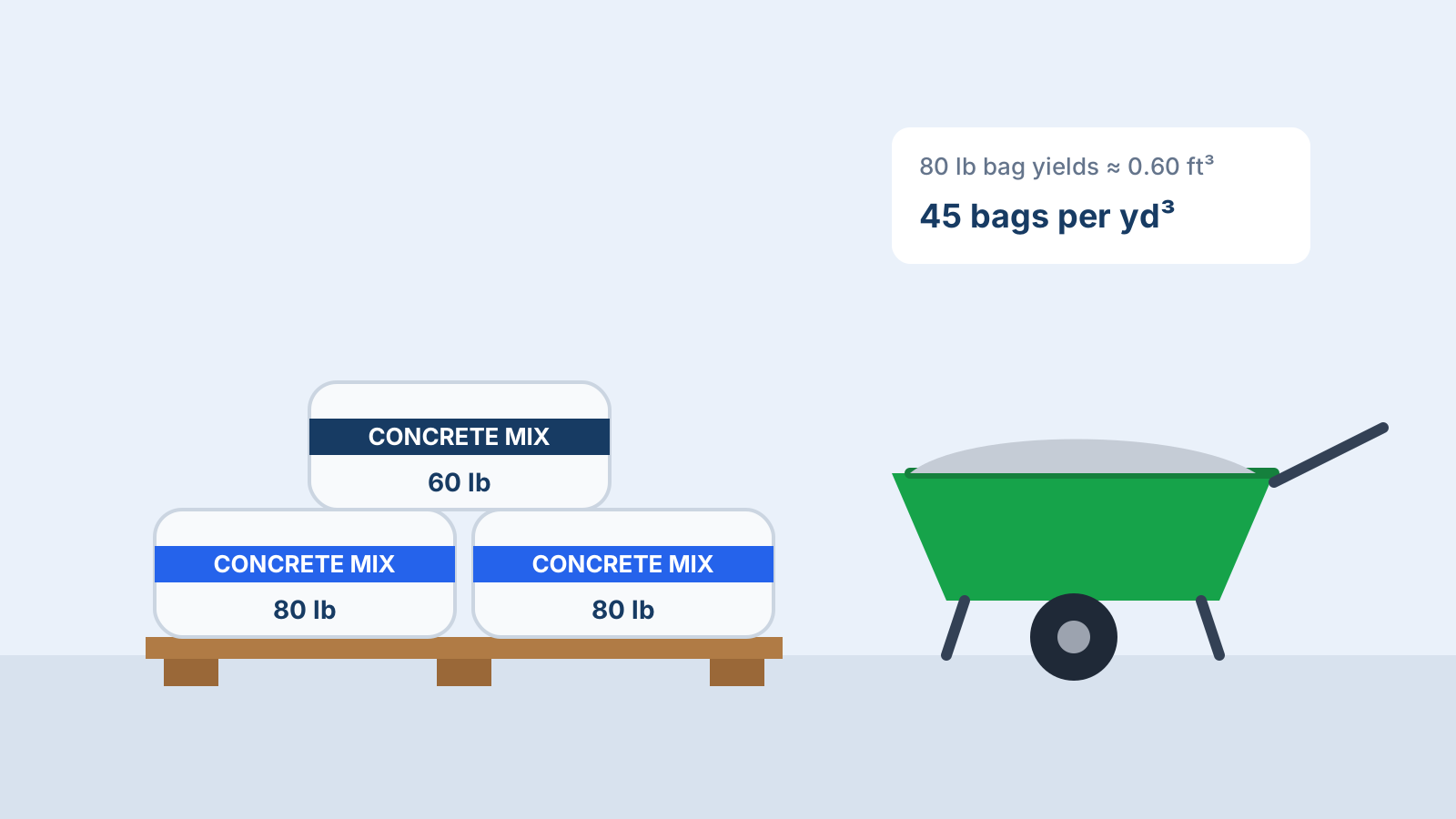
The yield is the volume of hardened concrete one bag makes once mixed with water. It is printed on the bag and depends on the product, so the weight of the bag alone is not enough.
You need 0.5 cubic yards of concrete and want to compare bag sizes (no waste added).
Result: 23 × 80 lb bags weigh about 1,840 lb in total, so plan transport accordingly.
An 80 lb bag typically yields about 0.60 ft³. At 4 inches thick that covers roughly 1.8 ft²; at 2 inches thick about 3.6 ft².
Larger bags usually cost less per cubic foot, but they are heavy to lift and mix. Smaller bags can be easier for one person and for filling post holes one at a time.
Follow the manufacturer's instructions. As a rough guide, an 80 lb bag often needs about 3 quarts (around 3 litres) of water, but adding too much weakens the concrete.
Understand concrete bag yields, convert volume into bags, and compare 40, 60 and 80 lb bags (and 20–30 kg bags) with worked examples and a quick reference table.
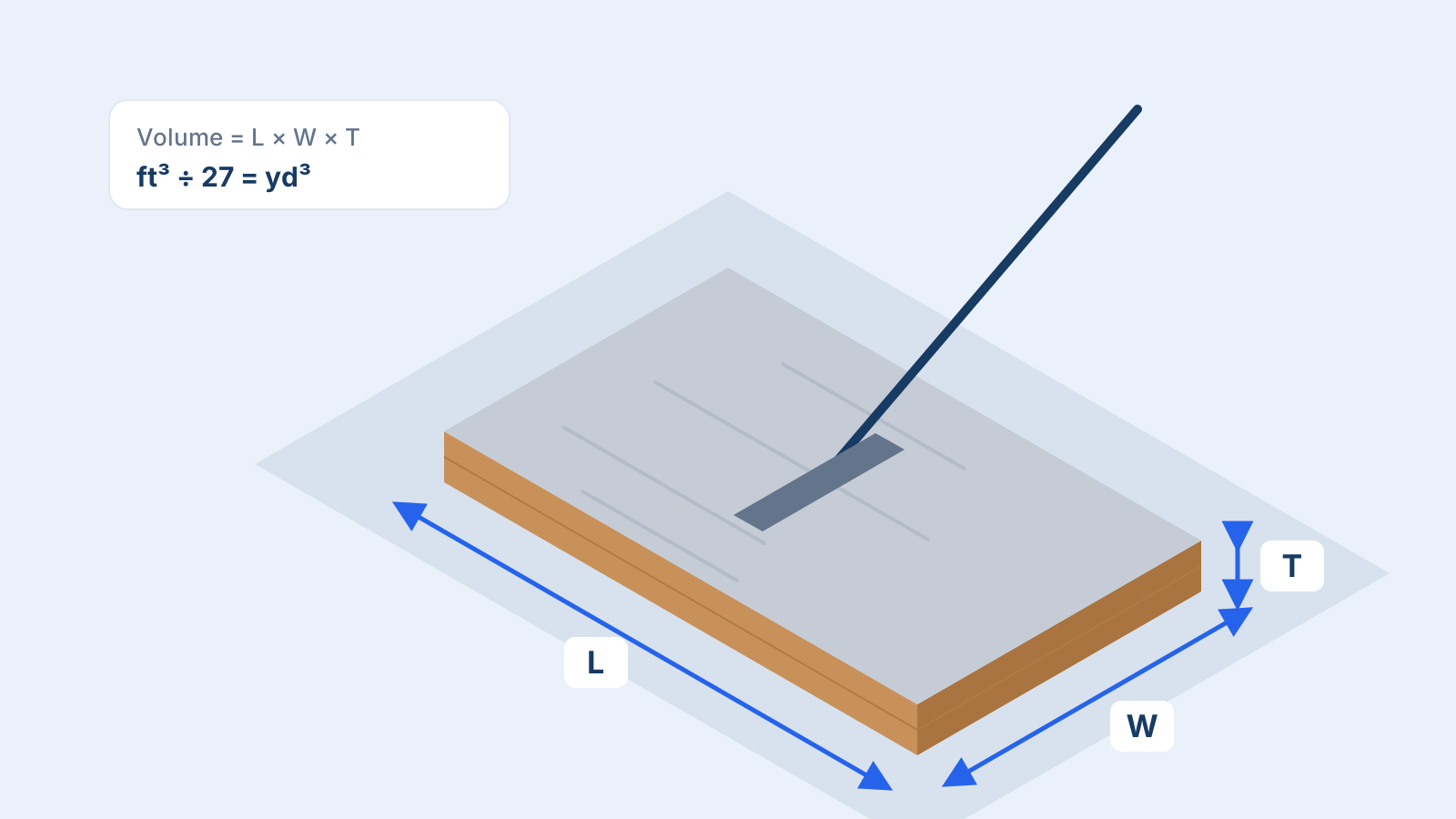
Learn how to calculate concrete for a slab step by step, convert to cubic yards or cubic metres, add the right waste allowance and decide between bags and ready-mix.
Results are estimates based on the measurements and assumptions you enter. Always confirm product specifications, local building codes and final quantities with your supplier or a qualified professional. See our disclaimer.